
Stargazing with a Green Laser in Ireland: How Societies and Guides Run a Star Tour
A green laser turns a public star night into a guided tour of the sky. How Irish astronomy groups and dark-sky guides plan the evening, what to show in each season, and how to keep the crowd safe.
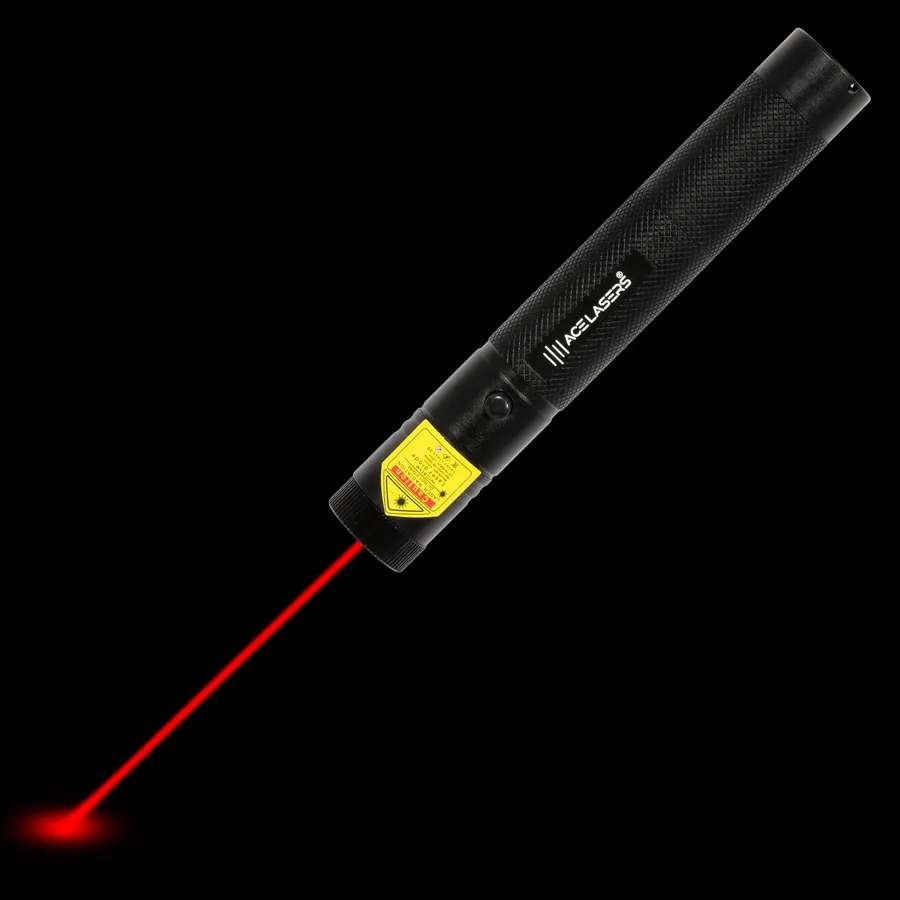
Anyone who has tried to show a crowd "that star, just under the W shape" knows how quickly it falls apart: half the group finds it, the other half is looking at something else entirely. Stargazing with a green laser changes the evening. On a dark night the beam looks as though it reaches out and touches the exact star you mean. Astronomy societies, outreach volunteers and guides at Ireland's dark-sky sites use one for exactly that reason, and the best of them use it with real discipline. Here is how to plan and run an evening from start to finish.
Picking a laser for the sky
For star pointing, green is the only real option: the line shows up at night, and dark-adapted eyes see green better than any other colour. Under a properly dark sky, a 5–50 mW pen-style laser like the AG-1 draws a clear line for groups of any size. A Pro model at 50–500 mW is brighter and may suit experienced guides at large public events or on the edge of a town where light pollution dulls the sky, but it comes with more risk. Go for the least power your sky and your audience require. Our astronomy laser pointer page goes into more detail.
Groundwork before the night
- Know your location. Stay well away from airports and from approach and departure routes. Find out what airspace is around your site and choose somewhere clear of it.
- Agree the society's rules. Who may use the laser, where it is stored, and the firm rule that it is never passed to members of the public or to children.
- Plan the route around the sky. Choose five to eight objects in a sensible sequence, and have a fallback for when cloud rolls in, which in Ireland it will.
- Sort the power. Fresh AAAs or charged lithium cells, plus a spare in an inside pocket, because cold nights flatten batteries fast.
- Pack the kit. A red-light torch, the laser in its usual pocket, 532 nm goggles for setting up and testing, and binoculars or telescopes.
A sixty-second briefing
Before the first star, take one minute to set the rules. The guide is the only person who uses the laser. No one looks towards it or into the line. Whenever a plane or helicopter appears, the laser goes off and everyone waits. The group stands behind or beside the guide, never in front. Said calmly, it reassures people and sets the tone for the whole evening.
Pointing technique
- Before each use, scan the sky for aircraft lights, helicopters and drones.
- Raise your arm so the laser already points high before your thumb goes on the button; never switch on at eye level.
- Work in short bursts: point, name it, let go. A constant beam distracts and adds risk.
- Start with bright, easy objects, then use them as stepping stones to fainter ones, a technique astronomers call star hopping.
- Keep the line well clear of the horizon, the treetops, buildings and the edges of the group.
- Never send a laser through a telescope or binoculars, nor anywhere near someone at the eyepiece.
What to show under Irish skies, season by season
Autumn
When proper darkness comes back in September and October, Vega, Deneb and Altair, the Summer Triangle, are still hanging in the western sky early in the night. Above you, the W of Cassiopeia guides the eye to the Great Square of Pegasus. Hop from Alpheratz at one corner along the stars of Andromeda to reach the misty patch of the Andromeda Galaxy, about the furthest thing anyone can see without a telescope. Later in the evening the Pleiades rise in the east, a perfect moment to hand out the binoculars.
Winter
Irish winter nights are long, with dark skies well before teatime in December, so this is prime season for public events as long as people are dressed for the cold. Orion takes centre stage. Trace his belt downwards to Sirius, the brightest star in the night sky, and upwards to orange Aldebaran in Taurus and on to the Pleiades. Betelgeuse and Rigel make a lovely lesson in star colours, and the Orion Nebula beneath the belt is always a hit in binoculars.
Spring
The Plough climbs high overhead. Its two pointer stars, Merak and Dubhe, lead straight to Polaris, the North Star. Then follow the curve of the handle to orange Arcturus (remember "arc to Arcturus") and continue to Spica. Leo, with its backwards question mark around Regulus, is another easy shape for newcomers.
Summer
Around midsummer the sky never gets fully dark in Ireland, so June and early July are hard going for star tours. By August the nights are drawing in again, the Summer Triangle is back, and under a dark sky the Milky Way pours down through Cygnus. Warm late-summer evenings make for comfortable public nights.
Planets, the Moon and meteor showers make brilliant extras, but check where they will be on the night of your event.
Ireland's dark-sky places
The darker your site, the sharper the line and the richer the sky. Ireland has some superb locations, among them the Kerry International Dark Sky Reserve and the Mayo Dark Sky Park, plus countless quiet rural spots far from street lights. Wherever you set up, the routine is the same: check for aircraft, keep the line high, and respect the landowner and any site rules.
Lasers and telescopes together
The two make a great team. Find the target with the laser, explain what people are about to see, then invite them to the eyepiece. Never look along or shine a laser through any optical instrument, and keep the laser off anywhere near the telescope queue.
Rules that never bend
- Aircraft, helicopters and drones are never targets. When one appears, switch off and wait until it is long gone.
- People, animals' eyes and vehicles are never targets either.
- The line never comes down towards the horizon, buildings or the group.
- Between uses, the laser stays in the guide's pocket, not on a table.
- Society lasers are locked away with the safety key removed where fitted, and out of children's reach.
Wear 532 nm goggles while setting up and testing; our laser safety glasses guide explains which. We sell ACE lasers to adults over 18 and to businesses, and keeping within Irish law is the buyer's responsibility. You will find more in our laser safety guide.
Wrapping up the night
Count the lasers in, switch them off, remove keys or batteries and pack them away. Make a quick note of which objects wowed the crowd and which were a struggle, and your next tour will flow even better.
In short
A green laser makes a star night clearer, livelier and easier for beginners to follow. Use the least power your sky allows, brief the group, point high in short bursts and stop for every aircraft. Most astronomy groups start with the AG-1 green laser pointer pen, and spare cells and chargers are in our accessories section.
More articles
Blog
1000 mW Laser Pointers and the Hunt for the Most Powerful Laser: What Milliwatts and Classes Really Mean
Ads for 1000 mW or "1 watt" laser pointers are everywhere. Before you believe the number, find out what a mill…
Laser Safety Glasses: Choosing Goggles for a Class 3B Laser Pointer
Own a class 3B laser? Then you need proper laser safety glasses. Learn to read wavelength ratings and OD numbe…
Laser Bird Deterrent on Irish Farms: A Routine for the Whole Year
How tillage and grassland farmers can fit a green laser bird deterrent into the farming year: the problem bird…