
1000 mW Laser Pointers and the Hunt for the Most Powerful Laser: What Milliwatts and Classes Really Mean
Ads for 1000 mW or "1 watt" laser pointers are everywhere. Before you believe the number, find out what a milliwatt measures, what the laser classes allow, and why the colour of the beam matters as much as its power.
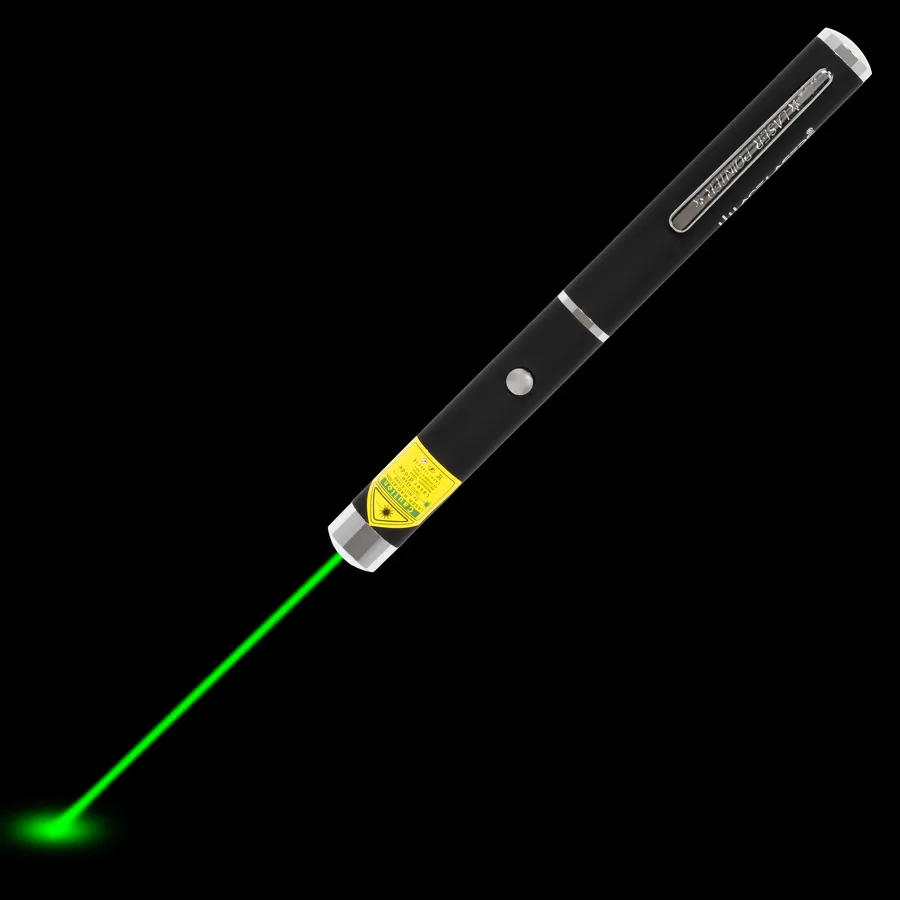
Scroll through any online marketplace and you will soon find a 1000 mW laser pointer, a "1 watt" pen or something wilder still, often for less than the price of a decent torch. The temptation is obvious. If you have 15 hectares of winter barley full of crows, or forty people waiting to see a faint galaxy, you want a laser that is beyond doubt strong enough. Yet that headline figure says less than you might think. Below we unpack four questions in turn: what a milliwatt is, what the classes permit, why colour can matter more than power, and how to settle on the right output for your own work.
Question 1: what is a milliwatt?
A milliwatt (mW) is one thousandth of a watt. On a laser it describes the optical power coming out of the front: the amount of light energy in the beam each second. It is a physical measurement, not a promise about appearance. Two lasers with the same mW rating can look completely different to your eye, and neither number tells you directly how far away the dot will still be visible.
To put our own range in context: an ordinary presentation pointer stays under 1 mW. The ACE pen-style lasers are rated 5–50 mW. The Pro series runs from 50 to 500 mW. At the top sits the VEX-1000 Pro, which we describe as a 500 mW high-power professional laser.
Raising the output does two things at once. The dot gets brighter, so it survives in stronger daylight and over longer distances. And the potential for eye injury climbs with it. Every piece of laser safety advice you will ever read grows out of that pairing.
Question 2: what do the laser classes allow?
Internationally, lasers are sorted into hazard classes under the IEC/EN 60825-1 standard. Here is a simplified version:
| Class | Typical visible output | In practice |
|---|---|---|
| Class 1 | Very low | No hazard in normal use; usually tucked away inside equipment such as printers. |
| Class 2 | Below 1 mW | Blinking normally shields the eye from a brief glance. Your typical presentation pointer. |
| Class 3R | Up to 5 mW | Low risk, but staring into the beam should be avoided. |
| Class 3B | Up to 500 mW | Direct beams and mirror-like reflections can damage the eye. Precautions and protective eyewear required. |
| Class 4 | Above 500 mW | Dangerous to eyes and skin, even through scattered reflections, and capable of starting fires. |
All of our pen-style and Pro lasers are class 3B, and the class itself caps output at 500 mW. Keep that ceiling in mind when you see a slim pen labelled 1000 mW, 5,000 mW or more. Either the label is wrong or the product belongs in a far more dangerous category than any pocket pointer should; in both cases, walk away. We quote our ranges honestly, and nothing we sell is designed to burn.
Question 3: why does colour matter so much?
Human vision is not equally sensitive across the spectrum. In daylight it peaks in the green-yellow region near 555 nm. A 532 nm green laser is close to that peak, so its dot appears several times brighter than a red one of equal power. Violet, at 405 nm, is barely inside the visible range; its spot looks faint even when the beam carries every bit as many milliwatts.
Our indicative range figures for the Pro series show how big the effect is:
| ACE Pro laser, 50–500 mW | Daylight | Dusk | Darkness |
|---|---|---|---|
| Green (532 nm) | approx. 500 m | approx. 2 km | Beam clearly visible, up to approx. 5 km |
| Red | approx. 200 m | approx. 1 km | approx. 2 km |
| Violet (405 nm) | approx. 50 m | approx. 300 m | approx. 1 km |
Same power band, wildly different results. It also explains why our most powerful model, the 500 mW violet VEX-1000 Pro, is not our most visible one: the green AGP-3 Pro outreaches it. When visibility is the goal, pick the colour first and the power second.
A side note: spot versus line
People often mix up two things. The dot is the patch of light where the beam strikes something: a field, a barn wall, a tree. Birds respond to it, and it is what you use to mark a target. The beam is the streak through the air itself, which only becomes visible when dust or moisture catch a little of the light, typically at dusk or in the dark and much more readily with green than with red. Stargazing relies on the line; bird scaring relies on the spot.
Question 4: how much power do you need?
- Star talks under a dark sky: a green laser of 5–50 mW suits most groups; the AG-1 is the usual choice. More on our astronomy laser pointer page.
- Birds at dusk on a yard or small field: 5–50 mW green can manage; for large fields, 50–500 mW gives you headroom. See our laser bird scarer page.
- Daylight work and long distances: one of our powerful green laser pointers at 50–500 mW.
- Fluorescence and specialist uses: violet, at whatever power the task really calls for.
Our standing advice: buy the least power that does the job. A gentler laser is simpler to control, gives you more margin when something goes wrong, and is less likely to injure someone through an unexpected reflection.
Why chasing "1 watt" misses the point
Suppose a 1000 mW pen really delivered its label. It would still be the wrong tool for almost everything our customers do. A farmer needs birds to notice the dot, not a beam that could dazzle a motorist on the road beyond the ditch. A stargazing guide needs a line the crowd can follow, not a glare that ruins everyone's night vision. More output means more dazzle, a longer danger zone and less room for error. The better question is never "what is the strongest laser I can get?" but "what is the gentlest laser that still does my job?"
Power and responsibility go together
A class 3B beam can harm an eye faster than the blink reflex can react, and a reflection from glass, water, polished metal or gloss paint can be just as dangerous as a direct hit. So high output always comes with a set of habits:
- People, animals' eyes, vehicles and aircraft are never targets.
- The sky is off limits wherever aircraft might be, and the laser goes off the moment one appears.
- Goggles must be rated for your wavelength; our laser safety glasses guide explains how to choose them.
- Children never get access; keys come out (where fitted) and the laser is locked away after use.
- High-power lasers are for outdoor use with a background you control.
We sell ACE lasers to adults 18+ and to businesses. Whether, where and how you may own, carry or use one depends on your circumstances, and keeping within Irish law is the buyer's job. The practical side is covered in our laser safety guide.
The short version
Bigger numbers on a listing do not make a better laser, and those 1000 mW claims deserve plenty of scepticism. Milliwatts tell you how much light leaves the laser; colour tells you how bright it will look; conditions tell you how far you will see it. For most outdoor work, start with green: 5–50 mW for night-time pointing, 50–500 mW for daylight and large areas. Have a look at our high power laser pointers, or let the laser finder narrow it down for you.
More articles
Blog
Laser Safety Glasses: Choosing Goggles for a Class 3B Laser Pointer
Own a class 3B laser? Then you need proper laser safety glasses. Learn to read wavelength ratings and OD numbe…
Laser Bird Deterrent on Irish Farms: A Routine for the Whole Year
How tillage and grassland farmers can fit a green laser bird deterrent into the farming year: the problem bird…
Green vs Red Laser Pointer: How Far Green, Red and Violet 5–500 mW Lasers Really Reach
Green or red, and how far will it go? We compare green, red and violet ACE lasers by day, at dusk and after da…