Order now, shipped tomorrow Free shipping from €50.00 with trackingBatteries included
Need advice?[email protected]
Cart
Shop by use

Astronomy Laser Pointers for Stargazing Groups and Guides

"Which one? That one?" disappears from a star night the moment a green astronomy laser pointer comes out: the beam appears to run right up to the star, and the whole group looks at the same spot. Society members, outreach volunteers and dark-sky guides rely on it. This page covers how to choose one and how to use it without putting anyone at risk.

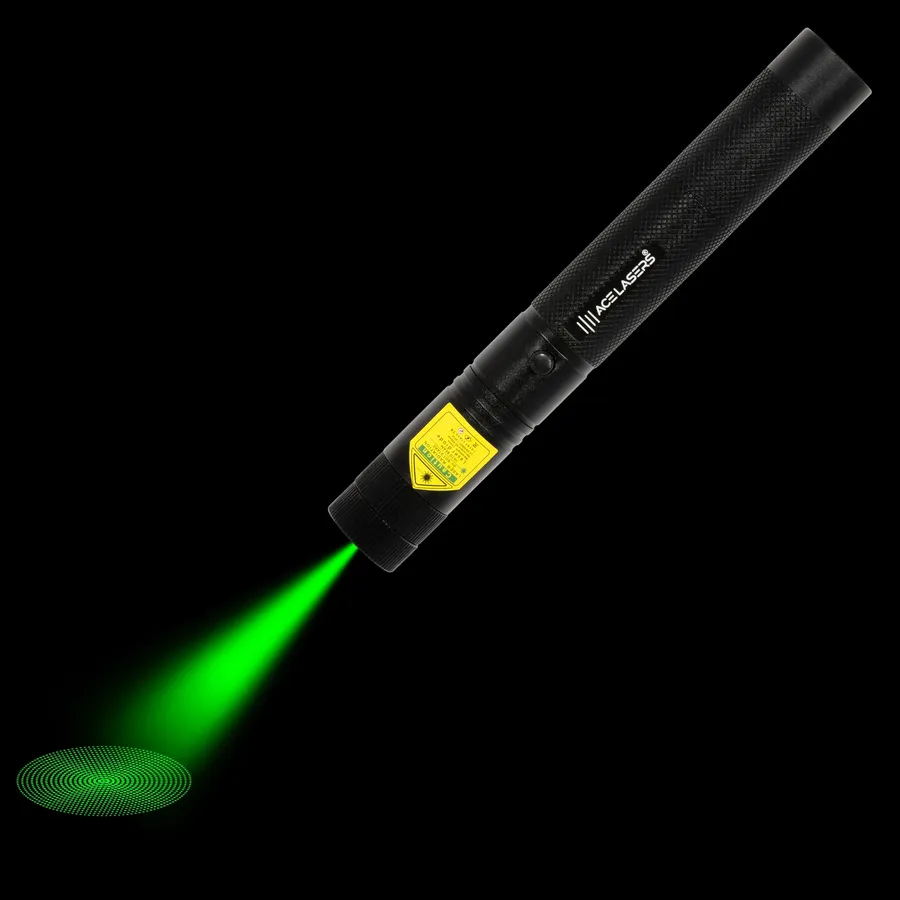
Green laser pointer pen ACE Lasers AG-1, 5–50 mW, AAA powered
Our advice for you · Pointing out stars
ACE Lasers AG-1304× sold

ACE Lasers AG-1 Green Laser Pointer Pen (5–50 mW)

A strong green pen on two AAAs: nothing to charge, beam visible after dark.

  • 532 nm green, 5–50 mW, laser class 3B
  • Beam you can see at night; indicatively a dot up to about 2 km in the dark
  • Powered by 2 × AAA (supplied)
€29.95€24.95
In stock · Order now, shipped tomorrow
Details
Pointing out stars

Also a good match

Laser finder

What makes a green laser so useful under the stars

Pointing with your arm never works: everyone stands at a slightly different angle and picks a different star. An astronomy laser pointer fixes the problem. Moisture and dust in the night air catch a small amount of the light all along the beam, so onlookers see a green line leaving your hand and apparently ending at the star you mean. The damp air of a typical Irish night often makes that line even more vivid. Green at 532 nm is also the colour the dark-adapted eye sees most easily; red and violet beams are far harder to pick out, which is why green has become the standard.

Choosing the right power

Most groups need far less power than they expect. Beneath a genuinely dark sky, a 5–50 mW pen-style laser draws a crisp beam and is the right tool for nearly every society or outreach evening. More output helps when light pollution from a nearby town washes the beam out or when the crowd is very large, but it raises both the risk and your responsibility. Always settle for the least power that gets the job done.

  • AG-1 green laser pointer pen (5–50 mW, 2 × AAA): where we would start. Uncomplicated, nothing to charge, a beam you can see at night and, indicatively, a dot visible up to about 2 km in the dark.
  • AG-2: as the AG-1 but with a pattern cap; leave the cap off when pointing at the sky.
  • AGP-3 Pro (50–500 mW): for experienced guides at big public events or under skies brightened by nearby lights. Indicatively the beam stays clearly visible up to about 5 km.
  • AGP-2 Pro Mini: a pocketable Pro for guides who also run evening walks.

A simple routine for the evening

  1. Set the ground rules first. Tell people that only the guide touches the laser, that no one looks towards it, and that it is switched off for any passing aircraft.
  2. Look up before you switch on. Every time, scan for aircraft lights, helicopters and drones. Stay well clear of airports and their approach and departure paths.
  3. Brief flashes. Show the object, say its name, release the button. A beam left on pulls attention away and adds risk.
  4. Aim high. Keep the beam well up the sky, away from treetops, rooftops and people standing at the edge of the group.
  5. Hand over to the optics. Use the laser to find the target, then let people look through binoculars or a telescope. A laser never goes through either.

For a full evening plan with objects for each season, read our article on stargazing with a green laser in Ireland.

Practical tips for cold nights

  • Batteries hate the cold. Carry the laser and any spare cells close to your body, and for a Pro bring a charged 18650 or 16340 backup.
  • Give the laser a permanent home in one pocket so your hand finds it in the dark without a torch.
  • If your society owns lasers, log who has which one and lock them away afterwards, keys removed where fitted.
  • Ireland's darkest sites, such as the Kerry International Dark Sky Reserve and the Mayo Dark Sky Park, show the beam beautifully; the rules about aircraft and people apply there just as they do anywhere else.

Safety

Aircraft, helicopters, drones, vehicles and people are never targets. When a plane appears, the laser goes off and stays off until it is well past. Keep the laser away from children, and wear 532 nm goggles while setting up or demonstrating. Keeping within Irish law is the buyer's responsibility. Our laser safety guide has more.

Frequently asked questions

Which astronomy laser pointer should I buy?
A green one. Under a dark sky the AG-1 (5–50 mW) covers most society nights; guides at big public events sometimes step up to the AGP-3 Pro.
How come a green beam is visible at night?
Moisture and dust in the air scatter a little light from the beam towards you, and at night the eye is most sensitive to green, so the line becomes visible.
A plane is coming over. What now?
Release the button straight away and wait until the aircraft is well clear before carrying on. Lasers are never aimed at or near aircraft.