
18650, 16340 or AAA? Laser Pointer Batteries Explained for ACE Lasers
Which battery does your ACE laser take, how do you charge lithium cells safely, and how do you stop the cold from cutting your session short? A practical guide to 18650, 16340 and AAA.
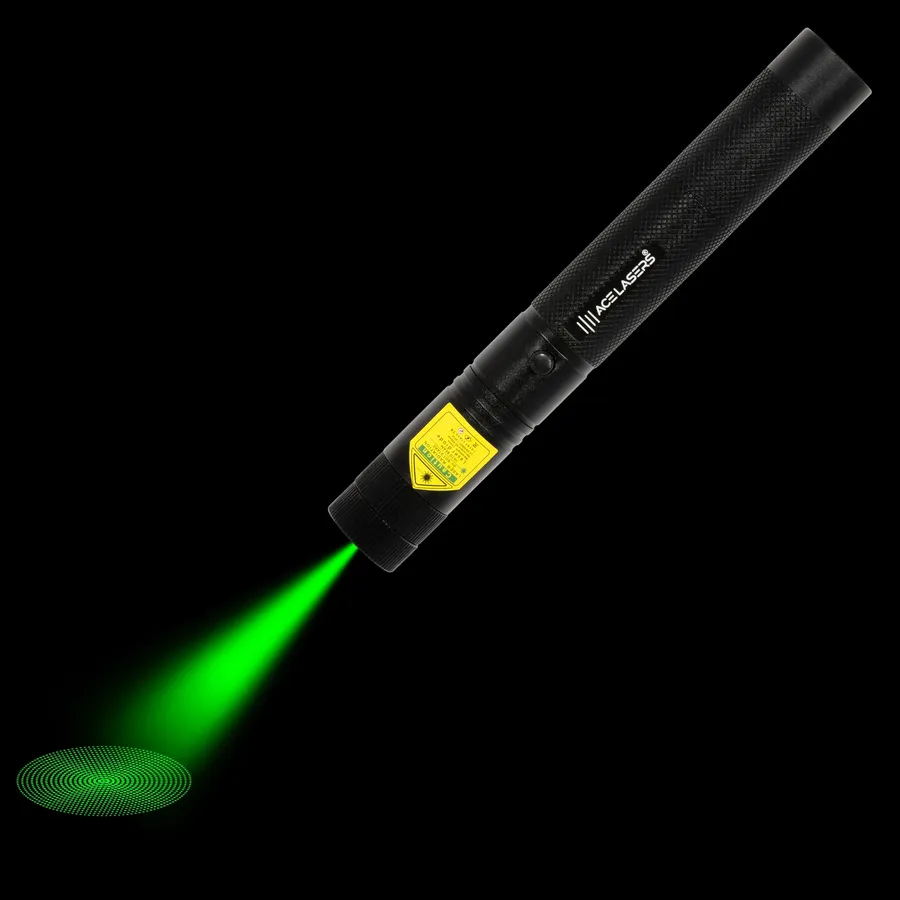
There is nothing more frustrating than a laser that fades out halfway through the dawn round or just as the group finally finds Andromeda. Our ACE range runs on three kinds of power: rechargeable 18650 and 16340 lithium-ion cells, and plain AAA batteries. Each has its place, and the lithium cells in particular repay a little care. Here is what you need to know to keep your laser running when it matters.
Quick comparison
| 18650 | 16340 | AAA | |
|---|---|---|---|
| Size | 18 mm across, 65 mm long | 16 mm across, 34 mm long | Standard AAA |
| Type | Lithium-ion, rechargeable | Lithium-ion, rechargeable | Usually alkaline (single use) |
| Per laser | 1 | 1 | 2 |
| ACE lasers | AGP-1 Pro, AGP-3 Pro, ARP-1 Pro, AVP-1 Pro | AGP-2, ARP-2, AVP-2 Pro Mini | AG-1, AG-2, AR-1, AV-1 |
| Charger needed | Yes | Yes | No |
Those odd-looking numbers are simply dimensions. An 18650 cell measures 18 mm by 65 mm; a 16340 measures 16 mm by 34 mm. The bigger cell holds noticeably more energy, which is why the full-length Pros use it. The smaller one is what allows the Pro Minis to be 12 cm long, at the price of fewer minutes per charge.
The 18650 battery: built for long days
Each full-size ACE Pro takes a single 18650 battery, supplied along with a charger. Four models use the same cell, so a PowerFox 18650 2-pack can back up a whole collection. On long sessions, keep a charged cell in an inside pocket; changing over takes seconds.
The 16340 battery: small, so think ahead
The AGP-2, ARP-2 and AVP-2 Pro Mini run on a 16340. It is perfect for carrying all day, but because it is small you will be recharging or swapping sooner than with an 18650. The easy fix is a spare from the PowerFox 16340 2-pack, kept in a battery case.
AAA: the batteries you can buy anywhere
Our pen-style models, the AG-1, AG-2, AR-1 and AV-1, each run on two AAAs, which come in the box. No charger, nothing special: if they go flat, the village shop or the nearest filling station will sort you out. For a laser that lives in the glovebox or a kit bag and only comes out now and again, that convenience is hard to beat. Take the AAAs out before long storage so they cannot leak.
Charging lithium cells without drama
Lithium-ion cells pack plenty of energy into a small tube. Handled properly they are safe and last a long time; abused, they can overheat. A few rules:
- Use a charger built for 18650/16340 lithium-ion cells: the one that came with your laser or the PowerFox charger. The PowerFox has an EU two-pin plug, so in Ireland you will need an EU-to-Irish/UK three-pin adapter (not included).
- Put the charger on a hard surface that cannot catch fire, away from radiators, the cooker and strong sun.
- Do not leave cells charging for hours with nobody around, and take them out once they are full.
- Check + and − every time a cell goes into the laser or the charger.
- Retire any cell that is dented, swollen, gets hot during normal use or has a damaged wrapper.
Cold mornings and frosty nights
A dawn bird round in January and a clear, frosty stargazing night both mean cold batteries. Every type gives less in the cold, and a laser can stop sooner than you expect. Three habits help:
- Carry the laser and spares in an inside pocket until the moment you need them.
- Bring one more spare than you think you will use.
- Let cold lithium cells warm up to room temperature before you put them on charge.
Storage, spares and travel
Never carry loose cells where keys, coins or tools could touch both ends at once: a short circuit can make a cell dangerously hot. A cheap plastic battery case solves this. For storage over weeks or months, keep lithium cells partly charged somewhere cool and dry, and take the cell out of a laser you will not be using. Flying from Dublin, Shannon or Cork with spare lithium cells? Check your airline's rules before you pack, as airlines usually set specific conditions for them.
What really decides battery life
How you use the laser matters far more than which battery is inside. Short bursts, which is how we recommend using a laser for birds or stars anyway, stretch a charge much further than leaving the beam on. Higher-output lasers draw more current, so a Pro will drain its cell quicker than a pen drains its AAAs. As a cell runs low, the spot usually dims noticeably before the laser cuts out; that is your cue to swap or recharge. If a laser seems weak, try a fresh cell or new AAAs before assuming it has a fault.
Lithium cells lose capacity slowly over many charge cycles. When a cell that once lasted a whole session now gives up halfway, replace it with a new 18650 or 16340 cell.
Matching battery type to the way you work
- Frequent or long sessions: a full-size Pro on an 18650, plus one or two spares.
- On you all day: a Pro Mini on a 16340, with a spare in a case.
- Occasional use, emergency kit, no charging wanted: a pen-style laser on AAAs.
All our cells and the charger are in the laser pointer batteries and accessories section. Browse lasers by type under high power laser pointers (18650/16340) and green laser pointers (AAA models included).
Batteries and safety
A laser can fire unexpectedly if the button gets pressed while you are changing the cell. Always point it at the ground and away from people while changing or testing batteries, and take out the safety key (where fitted) when you put it away. Keep both lasers and spare cells out of children's reach. Our laser safety guide has more.
More articles
Blog
1000 mW Laser Pointers and the Hunt for the Most Powerful Laser: What Milliwatts and Classes Really Mean
Ads for 1000 mW or "1 watt" laser pointers are everywhere. Before you believe the number, find out what a mill…
Laser Safety Glasses: Choosing Goggles for a Class 3B Laser Pointer
Own a class 3B laser? Then you need proper laser safety glasses. Learn to read wavelength ratings and OD numbe…
Laser Bird Deterrent on Irish Farms: A Routine for the Whole Year
How tillage and grassland farmers can fit a green laser bird deterrent into the farming year: the problem bird…